


A flogger spreads force across multiple soft tails, producing a broad, layered sensation that mixes thud and sting. A whip concentrates that same force into a single narrow point, delivering sharp sting with considerably more reach. If you are new to impact play, start with a short suede or soft leather flogger. It is forgiving, easier to control, and lets you build confidence before you consider anything more demanding.
The single most useful thing to know: a flogger is the beginner’s tool; a single-tail whip is an advanced one. The gap between them is not just sensation — it is skill, precision, and risk.
At a glance:
- Sensation: flogger = thud-forward with optional sting; whip = sharp, concentrated sting
- Reach: flogger = short to medium; single-tail whip = long, with a crack at the tip
- Learning curve: flogger = gentle; whip = steep, requires real practice
- Best for beginners: short suede flogger or riding crop
- Risk level: flogger = low to moderate; single-tail whip = moderate to high
Table of Contents
- What are floggers and whips, exactly?
- How does each tool actually feel?
- Why your tool choice shapes the whole scene
- How materials and construction change sensation and safety
- What technique and control do you actually need?
- Safety, consent and best practices for impact play
- What should beginners try first?
- How do you choose the right tool for your goals?
- How to clean and store your tools
- Where to buy in the UK and what to expect to pay
- Aftercare and when to seek medical help
- Key takeaways
- Why starting conservatively is always the right call
- Ready to explore? Playhause has you covered
- Useful sources
What are floggers and whips, exactly?
The practical difference between flogging and whipping has historical and legal roots, but for anyone shopping for impact play tools today, what matters is anatomy and sensation.
Floggers have a handle attached to multiple flexible tails, sometimes called falls. Those tails can number anywhere from six to forty or more. Common subtypes include:
- Short leather floggers (compact, controlled, good for beginners)
- Suede floggers (softer tails, more forgiving sensation)
- Rope floggers (heavier, produce a deeper thud)
- Rubber or synthetic floggers (sharper sting, easier to clean)
Whips are single-tail or few-tailed implements designed to concentrate force. Common variations include:
- Single-tail whip (the classic long whip; produces a crack and sharp sting)
- Signal whip (shorter single-tail, slightly more manageable)
- Riding crop (short, stiff, with a small leather flap at the tip; excellent for beginners)
- Cat-o’-nine-tails (multiple knotted tails; sits between flogger and whip in sensation)
The quickest way to tell them apart in a shop: count the tails and check the handle length. A flogger has many soft, flexible tails and a short handle. A single-tail whip has one long, tapered tail and a rigid handle built for swing and aim.
How does each tool actually feel?
Floggers deliver layered impact because multiple flexible strands distribute force across a wider surface. That spread produces what practitioners call thud, a deep, broad sensation that many people find easier to absorb and even pleasurable from the start. Depending on technique and material, floggers can also produce sting, but it is diffuse rather than sharp.
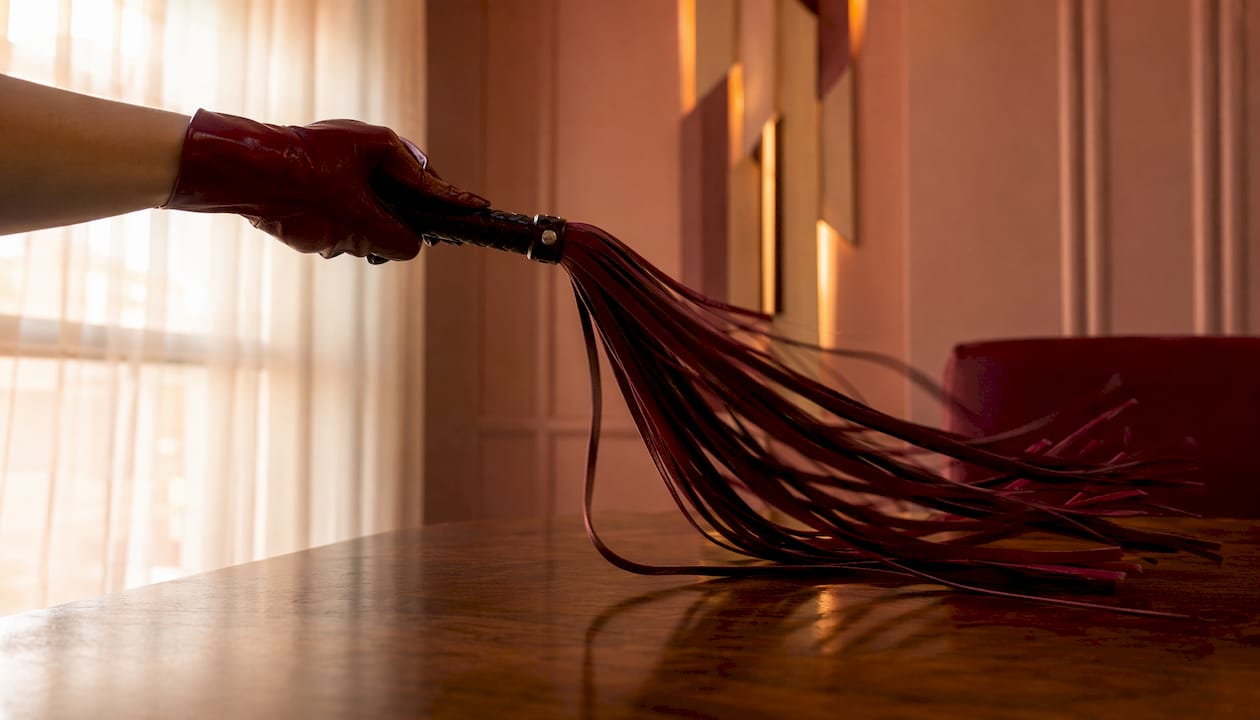
Whips concentrate force into a narrow point, producing sharp, stinging sensations and considerably more reach. The audible crack of a single-tail is itself part of the experience, adding a psychological edge that floggers simply cannot replicate.
Material changes everything. Suede tails are soft and forgiving. Braided leather is stiffer and produces a sharper, more defined sting. Rope tails are heavy and deliver a pronounced thud. Rubber or synthetic tails sting more intensely and are less predictable for beginners.
Sensation comparison:
| Axis | Flogger | Short single-tail / crop | Long single-tail whip |
|---|---|---|---|
| Primary sensation | Thud, diffuse sting | Sharp sting | Intense, concentrated sting |
| Surface vs deep | Broad surface impact | Surface to light-deep | Surface, very localised |
| Predictability | High | Moderate | Low (requires skill) |
| Auditory cue | Soft thwack | Crisp snap | Loud crack |
| Warm-up suitability | Excellent | Good | Not recommended |
Why your tool choice shapes the whole scene
Impact play choice affects emotional tone and scene dynamics in ways that go well beyond physical sensation. A flogger encourages rhythm. The repetitive, flowing motion of a flogger creates a meditative quality, building connection between partners and allowing the receiving partner to settle into sensation gradually. Many practitioners use it as a warm-up tool precisely because it sustains pace without sudden escalation.
A whip does something different. The distance required to swing a single-tail creates physical space between partners, which can feel ceremonial or dominant rather than intimate. That is not a flaw; it is a feature for scenes built around control, spectacle, or sharp intensity. The crack itself carries psychological weight.
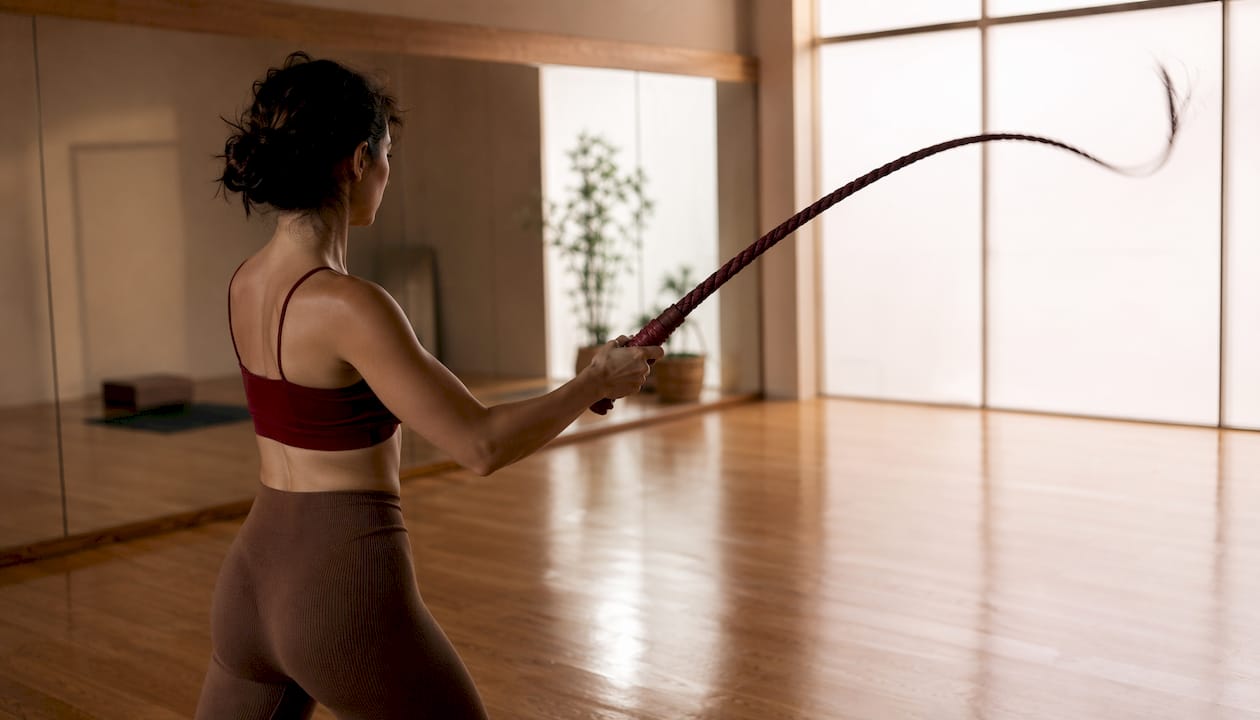
Pro Tip: Use rhythm deliberately. With a flogger, a steady, consistent swing at low intensity is far safer and more pleasurable than irregular hard strikes. Vary pace and distance rather than force to shift sensation.
Two brief examples show how this plays out in practice. In a warm-up scene, a soft suede flogger applied to the upper back in a slow, figure-of-eight swing builds sensation gently, allowing the receiving partner to relax into the experience. In a distance-and-control scene, a short signal whip used with precise aim on the buttocks creates sharp, deliberate impact with a clear power dynamic, but only once both partners have experience and clear communication in place.
For guidance on introducing BDSM safely, including how to frame these conversations with a partner, Playhause’s own guide covers the foundations well.
How materials and construction change sensation and safety
Construction details are not just marketing copy. They directly determine what a tool feels like and how safely it can be used.
Common materials and their profiles:
| Material | Typical sensation | Risk profile | Care notes |
|---|---|---|---|
| Suede | Soft thud, light sting | Low | Brush clean; avoid soaking |
| Soft leather | Moderate thud and sting | Low to moderate | Condition regularly |
| Braided leather | Sharp sting | Moderate | Condition; inspect for fraying |
| Rope (cotton/hemp) | Heavy thud | Moderate | Air dry; check for knots |
| Rubber / synthetic | Sharp sting | Moderate to high | Wipe clean easily |
Beyond material, these construction details matter when reading a product page:
- Tail count: more tails = more surface coverage and thud; fewer tails = more concentrated sting
- Tail length: longer tails increase reach and momentum, raising intensity
- Tail width: wider tails spread impact; narrow tails concentrate it
- Handle length and weight: a heavier handle improves swing control; a short handle limits reach
Product pages for beginner floggers typically list tail count, material, and overall length. Read those fields first. If a listing does not include them, that is a reason to look elsewhere.
What technique and control do you actually need?
The skill gap between a flogger and a single-tail whip is significant. With a flogger, the main challenge is body mechanics: maintaining a consistent swing arc, controlling distance, and avoiding wrap (where the tail tips curl around the body and strike unintended areas). These are learnable with modest practice.
A single-tail whip demands timing, aim, and an understanding of how the tail travels through the air. Misjudging the arc by a few centimetres can mean the tip lands on the spine, kidney area, or a joint rather than the intended target. That is why whips are generally recommended for experienced users.
Common risks to know about:
- Wrap with a flogger: tail tips hitting the side of the body, ribs, or hips with more force than intended
- Tip strike with a whip: the tip landing on a bony or sensitive area
- Abrasions and welts from repeated strikes in the same spot
- Bruising from excessive force or striking over existing marks
- Nerve or joint injury from hitting areas that should always be avoided (see the safety section below)
To build safe technique before partner play:
- Practise swings on a pillow or rolled towel to understand your arc and force
- Do a few test strokes on your own forearm at low intensity to gauge sensation
- Start with the receiving partner standing still, and use slow, deliberate strokes
- Watch for skin response after each stroke before continuing
Stop immediately if you notice unexpected marks, the receiving partner flinches sharply, or your aim feels inconsistent.
Safety, consent and best practices for impact play
Safe impact play depends on clear communication before, during, and after a scene. Safety-focused guides consistently stress starting with broad-surface tools, negotiating consent, and using safewords alongside progressive intensity.
Pre-scene checklist:
- Agree on which body areas are permitted and which are off limits
- Establish a safeword (a clear word like “red” to stop everything) and a slow-down word (like “yellow”)
- Agree on a non-verbal signal if the receiving partner may not be able to speak (e.g. holding an object they can drop)
- Discuss intensity preferences and any health conditions (skin conditions, blood-thinning medication, recent injuries)
- Confirm aftercare preferences in advance
Anatomy to avoid — always:
- Neck and throat
- Spine and tailbone
- Kidneys (lower back, above the hips)
- Joints: knees, elbows, ankles
- Head and face
- Feet and hands (nerve-dense, easily damaged)
Safe target areas for beginners include the upper back (below the shoulder blades), buttocks, and upper thighs. These areas have more muscle and fat to absorb impact.
Intensity progression:
- Begin with the lightest possible strokes to warm the skin
- Increase force gradually, pausing to check in verbally after every few strokes
- Watch for skin colour change, flinching, or tension as signals to slow down
- End with lighter, soothing strokes to bring the skin down from peak intensity
- Move into aftercare immediately after the scene ends
What should beginners try first?
Start with a short suede or soft leather flogger. Suede is the most forgiving material available: the tails are light, the sensation is diffuse, and the risk of accidental injury from a misplaced stroke is low. A short crop is an equally good starting point, particularly if you want something with a defined, precise impact rather than a flowing swing.
A simple four-step practice plan:
- Dry practice alone. Swing the flogger or crop against a pillow for ten minutes. Focus on a consistent arc and landing zone.
- Self-test. Apply a few light strokes to your own thigh to understand the sensation at low intensity.
- Partner warm-up. With your partner standing comfortably, use slow, light strokes on the upper back or buttocks. Check in after every three to five strokes.
- Short scene with aftercare. Keep the first session to ten to fifteen minutes. End with soothing strokes, then move into physical and emotional aftercare together.
What to have ready for your first session:
- Agreed safeword and slow-down word
- Water for both partners
- A clean cloth or wipes
- A light moisturiser or cooling gel for aftercare
- A small first-aid kit (plasters, antiseptic)
- Good lighting so you can see skin response clearly
For more on shared exploration with a partner, including how to navigate the conversation, Playhause’s guide on using toys together covers the communication side in practical terms.
How do you choose the right tool for your goals?
The right choice depends on what you want from a scene and how much practice you are willing to put in before partner play.
Decision guide:
- Want diffuse, rhythmic sensation and easy control? Choose a suede or soft leather flogger with 20–30 tails and a short handle.
- Want precise, sharp impact with minimal swing? Choose a riding crop or short rubber flogger.
- Want more intensity and reach once you have built skill? Move to a short signal whip with practice sessions first.
- Want the full single-tail experience? That comes after significant solo practice and ideally some in-person tuition.
Price ranges in the UK:
- Entry-level (under £30): synthetic or basic leather floggers and crops; adequate for beginners but check construction quality carefully
- Mid-range (£30–£80): good-quality leather or suede floggers with solid handles; the sweet spot for most beginners
- Premium (£80+): hand-crafted leather, specialist materials, or artisan single-tail whips; worth the investment once you know what you want
Full comparison:
| Tool | Sensation | Surface vs deep | Learning curve | Typical materials | Risk potential | Best for | Price range (UK) |
|---|---|---|---|---|---|---|---|
| Suede flogger | Soft thud, light sting | Broad surface | Low | Suede | Low | Beginners, warm-up | under £30 |
| Leather flogger | Thud and sting | Surface to moderate depth | Low to moderate | Leather | Low to moderate | Intermediate, rhythm play | £30–£80 |
| Riding crop | Sharp, precise sting | Surface | Low | Leather, synthetic | Low | Beginners, precise impact | under £30 |
| Short single-tail | Sharp sting | Surface | Moderate to high | Braided leather | Moderate | Intermediate, control scenes | £30–£80 |
| Long single-tail | Intense sting, crack | Surface, very localised | High | Braided leather | High | Experienced users only | £80+ |
How to clean and store your tools
Leather and suede need different care, and getting it wrong shortens the life of the tool and creates hygiene risks.
Cleaning by material:
- Leather: wipe down with a damp cloth after use; apply a leather conditioner every few uses to prevent cracking. Never soak leather or use harsh detergents.
- Suede: brush with a soft suede brush to remove surface residue. Suede cannot be wiped clean with water without damage; use a specialist suede cleaner for deeper cleaning.
- Synthetic and rubber: wipe with a mild soap solution and rinse. These are the easiest materials to clean and dry quickly.
- Rope: hand wash in cool water with a gentle detergent; air dry fully before storage to prevent mould.
Storage:
- Hang floggers from the handle rather than folding the tails; folding creates permanent kinks that alter how the tails fall
- Store away from direct sunlight, which dries and cracks leather
- Keep in a cool, dry place; a breathable fabric bag works well
Before each use, inspect:
- Tails for fraying, cuts, or loose threads
- The ferrule (the metal band where tails meet handle) for looseness
- The handle for cracks or splinters
- Any stitching for signs of separation
A damaged tool is an unsafe tool. If tails are fraying badly or the ferrule is loose, retire it.
Where to buy in the UK and what to expect to pay
UK buyers have several options, from high-street adult retailers to specialist online shops. For beginners, a curated online retailer with clear product descriptions is usually the most practical choice: you can read construction details, check returns policies, and order discreetly without pressure.
What to look for on any product page:
- Material listed clearly (not just “leather-look” or “vegan leather” without further detail)
- Tail count and tail length
- Overall length of the implement
- Care instructions
- A clear returns policy
Privacy considerations:
- Look for discreet billing (the charge on your statement should not identify the retailer’s category)
- Discreet packaging means plain outer packaging with no branding or product description visible
- Check the retailer’s data protection and privacy policy before creating an account
Playhause offers discreet packaging and free delivery on orders over £60, with product pages that list construction details. For UK buyers who want privacy alongside product transparency, that combination is genuinely useful. Playhause also covers BDSM safety topics in its editorial content, which adds context when you are browsing products.
Aftercare and when to seek medical help
Aftercare is not optional. It is the part of impact play that keeps both partners physically and emotionally safe after a scene ends.
Practical aftercare steps:
- Apply a cool, damp cloth to any reddened or warm skin
- Offer water to both partners; adrenaline and endorphins during a scene can mask dehydration
- Use a gentle, unscented moisturiser on impacted areas once the skin has cooled
- Stay together for a period of quiet connection; emotional aftercare matters as much as physical care
- Check in again the following day, as bruising and emotional responses can surface hours later
Red flags that require medical attention:
- Loss of sensation or numbness in any area
- Severe or rapidly worsening swelling
- Skin broken deeply or bleeding that does not stop with gentle pressure
- Signs of concussion (confusion, nausea, sensitivity to light) if the head was involved
- Breathlessness or chest pain
- Severe pain that does not ease within a few minutes of stopping
If you do seek medical help, you do not need to disclose the full context unless you choose to. Describe the injury clearly: the location, what caused the impact, and how long ago it happened. Clinicians are there to treat you, not to judge.
Key takeaways
A flogger is the right starting point for almost every beginner: lower risk, easier control, and a forgiving sensation that allows gradual progression.
| Point | Details |
|---|---|
| Flogger vs whip sensation | Floggers produce broad thud and diffuse sting; whips deliver sharp, concentrated sting with more reach. |
| Learning curve gap | Floggers require modest practice; single-tail whips demand real skill and should not be used on a partner without significant solo practice first. |
| Safety fundamentals | Always agree safewords, avoid the spine, kidneys, joints, and neck, and progress intensity gradually with regular check-ins. |
| Best beginner choice | A short suede or soft leather flogger, or a riding crop, is the safest and most manageable starting implement. |
| Playhause for UK buyers | Playhause stocks impact play tools with discreet packaging and free delivery over £60, with product pages listing construction details. |
Why starting conservatively is always the right call
There is a tendency in online discussions of impact play to treat skill progression as a matter of personal preference, as though choosing a single-tail whip early is simply a bolder option rather than a genuinely riskier one. It is worth being direct about this: the gap between a suede flogger and a long single-tail is not just a sensation difference. It is a difference in the margin for error.
A misplaced flogger stroke on a beginner might land slightly off-target and feel uncomfortable. A misplaced whip tip on the same beginner can cause a welt, a bruise, or a nerve injury in a matter of seconds. The tool does not forgive inexperience the way a flogger does.
The other thing that gets underestimated is the emotional dimension. Consent and aftercare are not bureaucratic steps to tick off before the interesting part begins. They are the structure that makes the interesting part possible. Scenes that go wrong almost always involve a gap in communication, not a gap in equipment. Starting with simpler tools keeps the focus on that communication, which is where it belongs.
Ready to explore? Playhause has you covered
If you are looking for a safe, well-made starting point, Playhause is a practical choice for UK buyers. The range covers beginner-friendly impact tools alongside the broader bondage and intimate accessories category, with product pages that list the construction details you need to make an informed choice: material, length, and tail count.

Every order arrives in plain, discreet packaging with no external branding, and free delivery applies to orders over £60. If you are not sure where to start, browse the Playhause store and filter by material and intensity level. Check the product description carefully for tail count and length before you buy, and read the care instructions so your tools last.
Useful sources
- How to introduce BDSM safely | Playhause — Playhause’s own practical guide covering consent, negotiation, and first steps; a good companion read to this article.
- How to safely explore impact play | Rouse Therapy — A therapist-authored safety guide covering consent, safewords, and progressive intensity; one of the more grounded clinical perspectives available.
- Paddle vs Whip vs Flogger | BDSMWoody — Practical comparison of impact tools with notes on sensation and scene use.
- Flagellation | Wikipedia — Background on the historical and terminological distinction between flogging and whipping; useful context for definitions.
- Dragontailz intro flogger | Liberator — Example of a beginner product page showing how construction details (tail count, material, length) are presented; useful as a reference for what to look for when shopping.