


Water-based lubricant is the best default choice for use with condoms. It is compatible with latex, polyurethane, and nitrile condoms, safe with most sex toys, and easy to wash away. For longer sessions, water play, or anal sex, a silicone-based lubricant is the stronger option — it lasts considerably longer and does not dry out. The one rule that overrides everything else: never use oil-based products with latex or polyisoprene condoms.
Quick rules to keep in mind:
- Water-based lube works with every condom material and most toys — it is the safest all-round choice.
- Silicone-based lube lasts longer and suits water play and anal sex, but avoid it on silicone toys.
- Oil-based products weaken latex — coconut oil, baby oil, and petroleum jelly all count.
- For anal sex, use more lube than you think you need, and prefer silicone or a generous water-based formula.
- Always check the label for “condom compatible” before you use any product.
Pro Tip: Always check the specific variant you are buying, not just the brand. A brand’s warming or tingling version may contain additives that are not condom-safe, even when the standard version is fine.
Table of Contents
- Why does adding lube matter when you use condoms?
- How do water, silicone, oil, and hybrid lubes behave with condoms?
- What ingredients and product types should you avoid?
- How to use lube with a condom, step by step
- Which lube works best for your situation?
- Which ingredients commonly cause irritation or infections?
- Playhause-curated condom-safe lubricant picks for the UK
- Key takeaways
Why does adding lube matter when you use condoms?
Friction is the main reason condoms fail during use. When there is not enough lubrication, the condom stretches under pressure, and that repeated stress increases the chance of a tear. Extra lube reduces friction and therefore reduces that risk — even when the condom is already pre-lubricated from the packet.
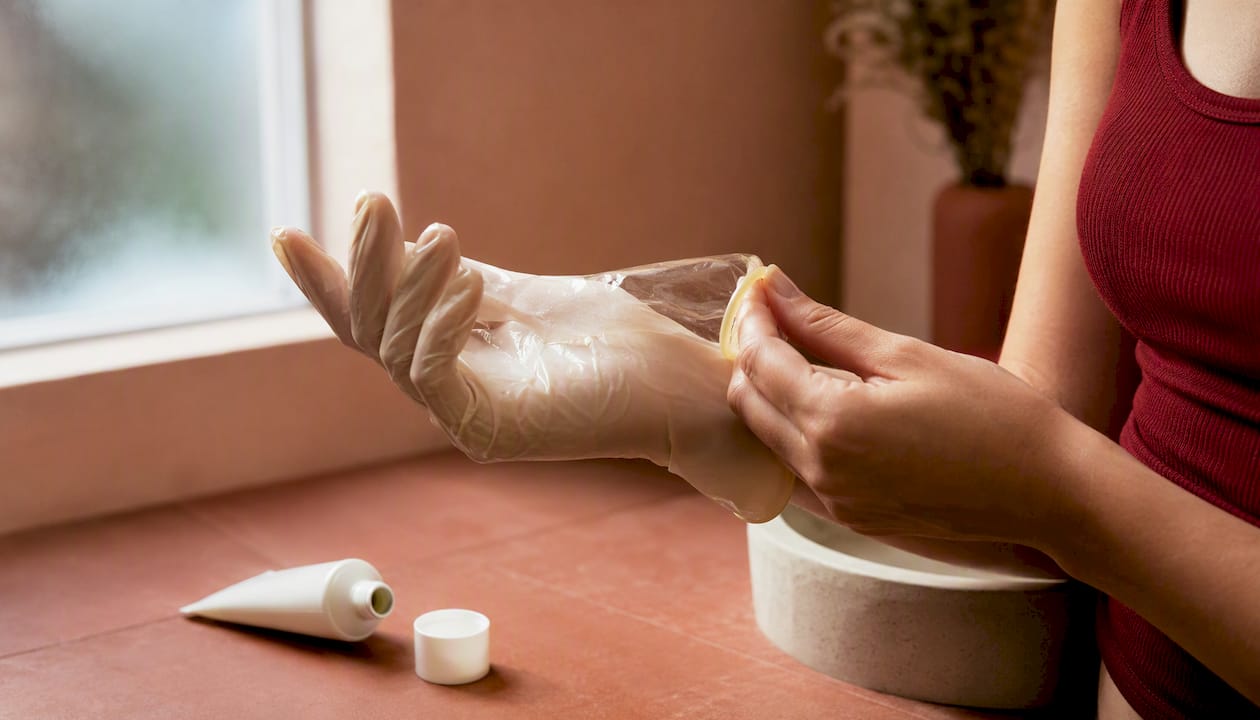
The pre-lubrication on most condoms is minimal. It is enough to make the condom easier to put on, not enough to sustain comfort through a full session. Sexual health guidance consistently recommends adding your own lubricant, particularly for anal sex, where the body produces no natural lubrication at all.
There are situations where extra lube moves from helpful to genuinely necessary:
- Anal sex: no natural lubrication is produced; insufficient lube significantly raises the risk of tissue damage and condom breakage.
- Vaginal dryness: caused by hormonal changes, medication, stress, or simply where you are in your cycle — lube removes discomfort and protects the condom.
- Long sessions: natural lubrication decreases over time; reapplying lube maintains both comfort and condom integrity.
- Toy and condom use together: toys create additional friction points; lube on the outside of the condom reduces wear.
- Shower or bath sex: water washes away natural lubrication and water-based lube quickly — silicone is the better choice here.
Research note: A study published via PubMed found that lubricant use during anal intercourse is associated with reduced condom breakage. The evidence supports what sexual health clinicians have long advised: more lube, not less.
How do water, silicone, oil, and hybrid lubes behave with condoms?
Not all lubricants are equal, and the differences matter for safety, not just comfort. The table below covers the four main types against the dimensions that count most for condom use.
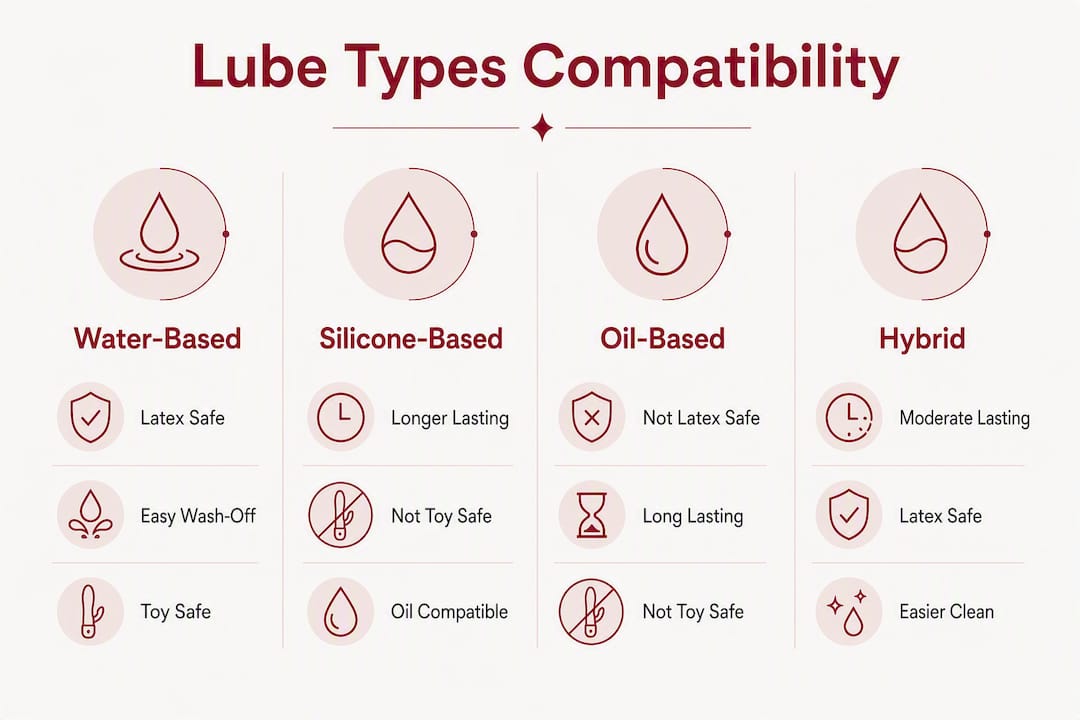
| Type | Latex condoms | Polyurethane / nitrile | Best for | Lasting time | Silicone toy safe | Wash-off |
|---|---|---|---|---|---|---|
| Water-based | ✓ Safe | ✓ Safe | All-round, vaginal, toy use | Short to medium — may need reapplication | ✓ Yes | Very easy |
| Silicone-based | ✓ Safe | ✓ Safe | Anal, long sessions, water play | Long — does not dry out | ✗ No | Soap and water needed |
| Oil-based | ✗ Unsafe | ✓ Safe (polyurethane only) | Massage, non-latex only | Long | ✗ No | Difficult — can stain |
| Hybrid (water + silicone) | ✓ Safe | ✓ Safe | Middle ground, longer sessions | Medium to long | Check label | Moderate |
The polyurethane exception is worth understanding. Oil does not degrade polyurethane the way it degrades latex, so technically an oil-based lube is safe with a polyurethane condom. In practice, most people do not check their condom material in the moment. Defaulting to water or silicone removes that risk entirely.
Hybrid lubes sit between the two main types: longer lasting than pure water-based, easier to clean than pure silicone. They are a reasonable middle ground, but always confirm the “condom compatible” claim on the specific product’s label before use.
Pro Tip: Silicone lube can cloud or degrade silicone toy surfaces over time. If you are using a silicone toy with a condom, use a water-based lube instead, or place a condom over the toy to protect it.
A note on silicone lube and sensitive skin: because silicone contains no water, it does not require the preservatives (such as parabens) that many water-based formulas include. For people with sensitive tissue or recurrent infections, silicone may be gentler than some water-based options.
What ingredients and product types should you avoid?
Some products look like obvious choices but can damage condoms or irritate sensitive tissue. Here is what to steer clear of.
Avoid these with latex or polyisoprene condoms:
- Coconut oil
- Baby oil
- Petroleum jelly (Vaseline)
- Massage oils and body lotions
- Any product with “oil” in the ingredients list
Avoid these if you are prone to irritation or infections:
- Glycerine (can feed yeast and increase infection risk)
- Parabens (potential sensitiser for some people)
- Propylene glycol (can cause irritation in some individuals)
- Flavoured lubes containing sugars
- Warming or tingling additives — these may contain incompatible ingredients and can irritate delicate tissue
- Spermicides such as nonoxynol-9, which can cause rectal and vaginal irritation with regular use
- Benzocaine (a numbing agent found in some anal lubes — it can mask pain that signals you need to slow down)
How to read the label: look for the words “condom compatible” on the front or back of the packaging. If that phrase is absent, check the ingredients list for any oil, petrolatum, or mineral oil. When in doubt, choose a product that explicitly states compatibility.
“Natural” is a marketing word, not a safety certification. Coconut oil, almond oil, and other plant-based oils are widely marketed as gentle and skin-friendly — and they will still degrade a latex condom. Prioritise the compatibility label over any wellness-adjacent claim on the front of the bottle.
How to use lube with a condom, step by step
Apply the majority of your lube to the outside of the condom, after it is on. A small amount can go inside the tip before rolling it on — this can improve sensation — but too much inside creates a slipping risk.
- Check the condom packet. Look at the expiry date and check for any damage to the foil. A compromised packet means a compromised condom.
- Open carefully. Tear along the notch, not with your teeth or scissors. Avoid sharp jewellery near the packet.
- Roll the condom on fully. Leave a small space at the tip to collect fluid, and squeeze out any air as you roll.
- Apply lube to the outside. Squeeze a generous amount onto the shaft of the condom and spread it evenly. For vaginal sex, a few pumps or a coin-sized amount is usually enough. For anal sex, use considerably more.
- Reapply as needed. Water-based lube dries out. If things start to feel less smooth, add more — do not push through discomfort.
- Using a toy with a condom? Apply lube to the outside of the condom on the toy, not directly to the toy’s surface. This protects the toy’s material and keeps clean-up straightforward.
- After sex: remove the condom carefully before it can slip, tie it, and dispose of it in the bin (not the toilet). Wash the area with warm water.
For anal sex specifically: use a noticeably larger amount of lube than you would for vaginal sex, and reapply whenever things feel like they are drying out. Silicone lube is the better choice for longer anal sessions because it does not need reapplication as frequently.
Pro Tip: If your water-based lube starts to feel tacky, add a small drop of water to reactivate it rather than reaching for a new application. It extends the product and keeps things comfortable.
Which lube works best for your situation?
The right lubricant depends on what you are doing, not just what is in your drawer. Here is a quick scenario guide.
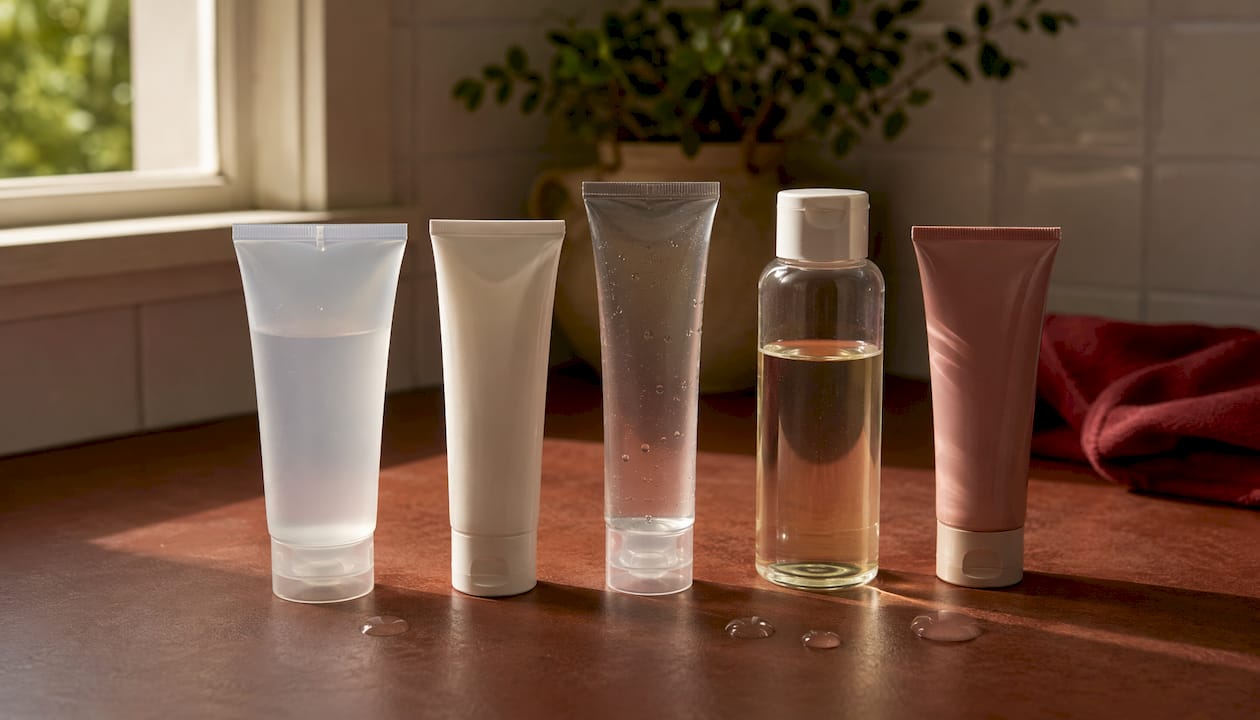
Default choice for most situations: water-based. It works with every condom type, most toys, and cleans up without effort. Brands like K-Y Jelly and Durex Play are widely available across the UK and are straightforward condom-safe options.
Scenario-by-scenario breakdown:
- Anal sex: silicone-based is the top pick — it lasts longer and does not require constant reapplication. If you prefer water-based, choose a thicker gel formula and reapply generously. Avoid numbing agents (benzocaine) that mask discomfort.
- Vaginal dryness: a glycerine-free, water-based lube is usually the most comfortable. YES WB (water-based) is a well-regarded UK option formulated for sensitive tissue and is certified organic. Silicone also works well here.
- Shower or bath sex: water washes away water-based lube almost immediately. Silicone is the only practical choice for water play — it stays put.
- Toy and condom use together: water-based is the safest choice, particularly if your toy is silicone. For guidance on using toys with a condom, the material of the toy matters as much as the lube type.
- Sensitive skin or recurrent infections: choose a glycerine-free, paraben-free formula. Sliquid H2O and YES WB are both designed with this in mind. Silicone-based lubes (such as Sliquid Silver) are also worth considering because they do not require preservatives.
- Spontaneous sex where clean-up matters: water-based wins. It washes off skin and fabric without staining and does not leave a residue.
- Longer sessions or hybrid preference: a hybrid lube gives you more staying power than water-based without the clean-up challenge of pure silicone. Always confirm the “condom compatible” label.
Pro Tip: For strap-on play, lube choice follows the same rules — but the volume needed is often higher. Playhause has a dedicated guide on lube for strap-on use that covers this in more detail.
Which ingredients commonly cause irritation or infections?
Lubricant ingredients affect more than just comfort. Some can disrupt vaginal or rectal flora, trigger allergic reactions, or cause recurring infections. Knowing what to look for on the label puts you in control.
Common sensitising or irritating ingredients:
- Glycerine: a sugar alcohol used to give lube a slippery texture. It can feed yeast in people prone to candidiasis. Glycerine-free formulas are widely available and are the better choice if you have recurrent thrush.
- Parabens (methylparaben, propylparaben): preservatives used in water-based lubes. Some people react to them with localised irritation.
- Propylene glycol: a humectant that can cause burning or irritation in sensitive individuals.
- Flavourings and sugars: common in flavoured lubes; can disrupt vaginal pH and increase infection risk.
- Warming and tingling agents (e.g. menthol, capsaicin derivatives): can cause significant irritation, particularly in anal use.
- Benzocaine: a numbing agent that removes the pain signal you need to pace yourself safely.
- Nonoxynol-9 (spermicide): causes tissue irritation with regular use and can increase STI transmission risk by damaging mucosal tissue.
If you are prone to yeast infections, choose a glycerine-free water-based lube or switch to silicone. Silicone lubes contain no water and therefore need no preservatives, which removes several of the above concerns in one step.
How to patch test a new lube:
- Apply a small amount to the inside of your wrist or inner arm.
- Wait 24 hours.
- If you see redness, feel itching, or notice any swelling, do not use the product on sensitive genital tissue.
- Even if the patch test is clear, introduce a new lube gradually and stop if you notice any irritation during or after use.
Pro Tip: If you keep experiencing irritation or recurring infections after switching lubes, speak to a sexual health clinician. It may not be the lube at all — a clinician can rule out other causes quickly and without judgement.
Playhause-curated condom-safe lubricant picks for the UK
These options are selected for clear condom compatibility, ingredient transparency, and availability in the UK. Each one suits a different situation, so the right choice depends on what you need.
-
Durex Play Feel (water-based): one of the most accessible condom-safe lubes in the UK, available in most pharmacies and supermarkets. Compatible with latex, polyurethane, and nitrile condoms. Good for vaginal sex and general use. Affordable and easy to find, though it does dry out faster than silicone options.
-
K-Y Jelly (water-based): a long-established, clinically trusted formula. Glycerine-free in its standard formulation, which makes it a reasonable choice for people with sensitivity concerns. Widely stocked across the UK. Not the longest-lasting option, but reliable and well-tolerated.
-
Sliquid H2O (water-based, glycerine-free): formulated without glycerine, parabens, or DEA. A strong pick for anyone with recurrent infections or sensitive tissue. Compatible with all condom materials and silicone toys. Sliquid’s range also includes Sliquid Silver (silicone-based) for longer sessions.
-
YES WB (water-based, organic): certified organic and pH-balanced for vaginal use. Free from glycerine, parabens, and synthetic fragrances. Particularly well-suited to vaginal dryness and sensitive skin. Available from pharmacies and online in the UK.
-
Silicone-based options (e.g. Sliquid Silver or similar): for anal sex, long sessions, or water play, a quality silicone lube is the practical choice. Long-lasting, condom-safe, and paraben-free. Keep it away from silicone toys.
Aloe-based water-based lubes are also worth considering as an all-round option. Reviewers consistently highlight them as non-sticky and versatile for both vaginal and anal use, and they tend to be gentle on sensitive tissue.
Pro Tip: When browsing lubricants, filter by “condom compatible” or “glycerine-free” to narrow down quickly. Playhause stocks a curated range of sexual wellness products with discreet packaging and free delivery on orders over £60.
Key takeaways
Water-based lubricant is the safest, most versatile default for condom use; silicone is the better choice for long sessions, anal sex, and water play — and oil must never be used with latex or polyisoprene condoms.
| Point | Details |
|---|---|
| Water-based is the default | Compatible with all condom materials, most toys, and easy to clean — the safest all-round choice. |
| Silicone for longer sessions | Lasts longer than water-based, ideal for anal sex and water play; avoid on silicone toys. |
| Never oil with latex | Coconut oil, baby oil, and petroleum jelly all degrade latex and polyisoprene condoms. |
| Check the label | Look for “condom compatible” on the packaging; do not rely on “natural” or “nourishing” claims. |
| Playhause curated picks | Sliquid H2O, YES WB, K-Y Jelly, and Durex Play are all condom-safe and available in the UK via Playhause. |
Storage and shelf life: keep lubricants in a cool, dry place away from direct sunlight. Check the expiry date before use — an expired lube can change in consistency and may no longer be effective or safe.
The part most guides skip over
The conversation around lubricant and condoms tends to focus on compatibility rules, and those rules matter. But there is a subtler issue that rarely gets addressed: the gap between what a product claims and what it actually contains.
“Natural” is the clearest example. Coconut oil has genuine skincare benefits. It is also one of the most common causes of latex condom failure, precisely because it is an oil. The word “natural” on a bottle tells you nothing about condom safety. Neither does “nourishing”, “organic”, or “gentle”. These are marketing descriptors, not safety certifications.
The same logic applies to product lines. A brand can sell a perfectly condom-safe standard lube and a warming variant in almost identical packaging. The warming version may contain additives that are not compatible with latex. Buying the same brand you used last time is not the same as checking the label on the specific product in your hand.
What actually protects you is the habit of reading the ingredients list and looking for “condom compatible” on every new product you buy. That takes about ten seconds and removes a significant amount of risk. No amount of brand loyalty substitutes for it.
Shop condom-safe lubricants at Playhause
Choosing the right lube should not be complicated, and it should not require a trip to a clinical-looking pharmacy shelf. Playhause stocks a curated range of condom-compatible lubricants selected for ingredient quality, compatibility, and real-world use.

Every order arrives in discreet packaging with no identifying branding on the outside. Free delivery applies to orders over £60, and buy-now-pay-later options are available at checkout. Whether you are looking for a glycerine-free water-based formula, a long-lasting silicone option for anal play, or something gentle for sensitive skin, the Playhause shop has options worth browsing. You can filter by product type to find condom-compatible and glycerine-free options quickly. If you have a question about a specific product or ingredient, the customer service team is there to help — no question is too small.
Useful sources and further reading
These are the primary sources used in this article, along with trusted UK and international guidance on lubricant and condom safety.
- Cornell Health: Condoms and Lubricants — clear, practical guidance on lubricant compatibility with condoms, including the risks of oil-based products with latex.
- ScienceInsights: Water vs. Silicone Lube for Condoms — detailed comparison of lubricant types, ingredient considerations, and compatibility notes.
- PubMed: Lubricant use and condom breakage during anal intercourse — peer-reviewed research on lubricant use and condom failure rates.
- WHO: Lubricants and condom use guidance — the World Health Organisation’s technical guidance on lubricant compatibility with latex condoms.
- Wirecutter / NYT: Best Personal Lubricants — independent product testing and reviewer recommendations for all-round lubricants.
- NIH / PMC: Rectal lubricant use and mucosal health — research on how lubricant ingredients affect rectal tissue, relevant for anal sex safety.
- NHS and Brook: for UK-specific sexual health guidance, the NHS website and Brook (brook.org.uk) are the most reliable starting points for advice on contraception, STI prevention, and safer sex.